
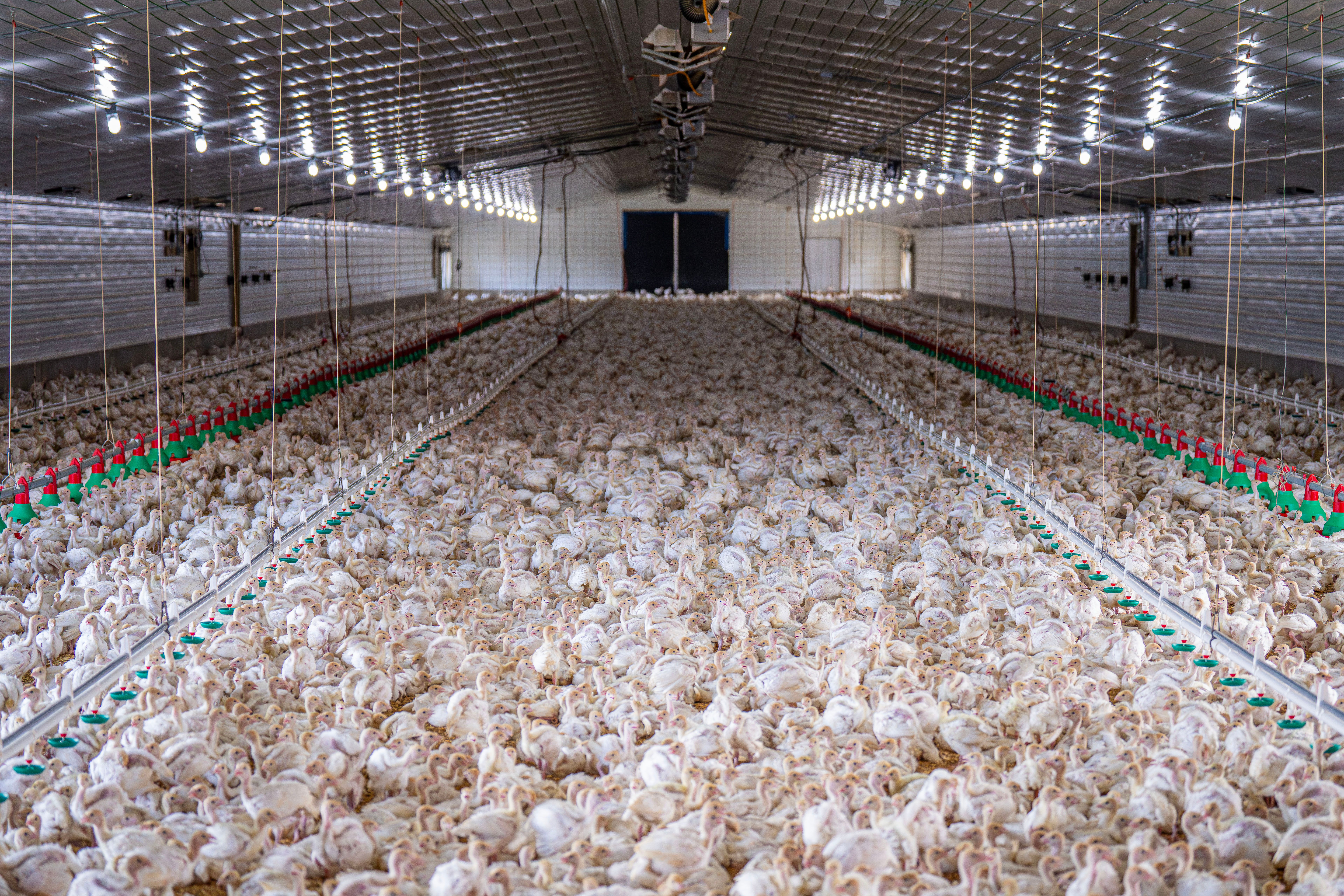
Chicken farms are an essential part of global food production. But, like many intensive agricultural operations, they can also release pollutants into the surrounding air.
Ammonia (NH₃), particulate matter (PM), odour compounds and bioaerosols can all originate from poultry housing, litter, manure and associated farm activities. Once released, these pollutants do not necessarily remain within the farm boundary. Their movement depends on factors including wind direction, weather conditions, ventilation, farm design and distance from the source. ScienceDirect
This makes poultry farm air quality an important consideration not only for farm operators and workers, but also environmental consultants, regulators and communities living nearby.
The question is: what should we be monitoring, and how can measurements help us understand what is happening beyond the farm boundary?
What air pollutants can come from poultry farms?
There is no single pollutant that defines air quality around a poultry farm. Research has identified a mixture of gases, particles and biological material associated with poultry production.
The pollutants of particular interest include:
The scale and composition of these emissions vary considerably. Bird numbers and age, housing type, ventilation, litter condition, manure management, temperature, humidity and season can all influence what is released. ScienceDirect
This variability is precisely why measurements taken in the surrounding environment can be valuable.
Why is ammonia important around chicken farms?
Ammonia is one of the most significant pollutants associated with intensive agriculture.
Within poultry housing, it is produced as uric acid and other nitrogen-containing compounds in poultry waste decompose. Ventilation then transports some of that ammonia from the building into the atmosphere.
Its environmental impact extends beyond the farm itself.
Once airborne, ammonia can be deposited onto land and water, contributing to nitrogen enrichment and ecosystem change. It can also react with other atmospheric pollutants to form secondary PM₂.₅ — fine particulate matter that can be transported considerably further from its original source. ScienceDirect
The scale of agricultural ammonia emissions makes this particularly important. The Environment Agency reports that farming contributed around 84% of England's total ammonia emissions in 2024, with intensive pig and poultry farming responsible for much of the ammonia released by Environment Agency-regulated businesses. GOV.UK
For permitted intensive poultry farms in England, ammonia is therefore specifically considered as part of environmental risk assessment. GOV.UK
What about particulate matter from poultry farms?
Dust is another important part of the picture.
Poultry houses contain numerous potential sources of airborne particles: litter and bedding, feed, dried faecal material, feathers, skin and microorganisms can all contribute to airborne particulate matter. Bird activity and ventilation can then help suspend and transport these particles. Taylor & Francis Online
Particle size matters.
PM₁₀ refers to particles with an aerodynamic diameter of 10 micrometres or less, while PM₂.₅ refers to particles measuring 2.5 micrometres or less. Smaller particles can penetrate further into the respiratory system. The World Health Organization states that PM₂.₅ can penetrate deep into the lungs and enter the bloodstream, with both short- and long-term particulate exposure associated with respiratory and cardiovascular effects. World Health Organization
That does not mean that the presence of a poultry farm automatically causes illness in somebody living nearby. Health effects depend on exposure, concentration, duration, individual susceptibility and other pollution sources.
It does, however, explain why particulate monitoring is useful when investigating air quality around intensive agricultural sites.
How far can emissions from a poultry farm travel?
There is no universal distance at which poultry farm emissions simply disappear.
Atmospheric dispersion is influenced by wind speed and direction, temperature, humidity, topography, ventilation outlets, particle size and atmospheric stability.
Research demonstrates why fixed assumptions about distance should be treated cautiously.
A UK study examining three poultry and three pig farms found elevated concentrations of bacteria, fungi, Staphylococcus species and endotoxin at varying distances up to 250 metres downwind compared with background measurements. ScienceDirect
Other research examining chicken houses sampled air as far as 400 metres downwind. In one study, airborne Staphylococcus aureus concentrations generally declined with distance, although the organism could still be isolated at 400 metres from two of the four farms studied. PubMed Central (PMC)
These studies should not be interpreted as a universal “impact radius”. Different pollutants disperse differently and every site has different conditions. Instead, they demonstrate an important principle:
“Distance alone cannot tell us what someone is exposed to. Measurement provides the evidence.
Why wind direction matters
An air-quality monitor tells us what is in the air. Meteorological data can help us investigate where it may have come from.
Imagine that a monitor records an increase in PM₁₀. Without additional information, that increase could potentially be associated with the farm, road traffic, agricultural machinery, domestic combustion, construction activity or another local source.
Now combine the same PM data with wind speed and direction.
If repeated concentration increases occur when the monitor is downwind of a particular source — and decrease when the wind changes — the dataset becomes considerably more informative. It does not automatically prove causation, but it provides evidence that can support source investigation and further analysis.
For environmental monitoring around poultry farms, meteorological measurements can therefore be just as important as pollutant concentration.
What is the best way to monitor air quality near a poultry farm?
The starting point should always be the monitoring objective.
If dust is the principal concern, continuous measurement of PM₁, PM₂.₅ and PM₁₀ can reveal concentration trends and pollution episodes that occasional spot measurements could miss.
Where agricultural gases are of interest, gas monitoring can be added alongside particulate measurements. Meteorological sensors can then record parameters such as wind speed, wind direction, temperature and humidity.
Monitor placement matters too. Depending on the investigation, useful locations could include the farm boundary, a downwind receptor and an upwind or background position. Comparing these measurements over time provides much more context than relying on a single reading.
Continuous monitoring is particularly valuable because poultry farm emissions and weather conditions are not constant. A short site visit could take place during relatively clean conditions and completely miss an episode occurring several hours later.
The objective should therefore be more than simply collecting numbers. It should be to build a dataset capable of showing what changed, when it changed and under what conditions.
Turning poultry farm air quality into measurable data
At Turnkey Instruments, we develop environmental monitoring equipment designed to turn changing air conditions into measurable, interpretable data.
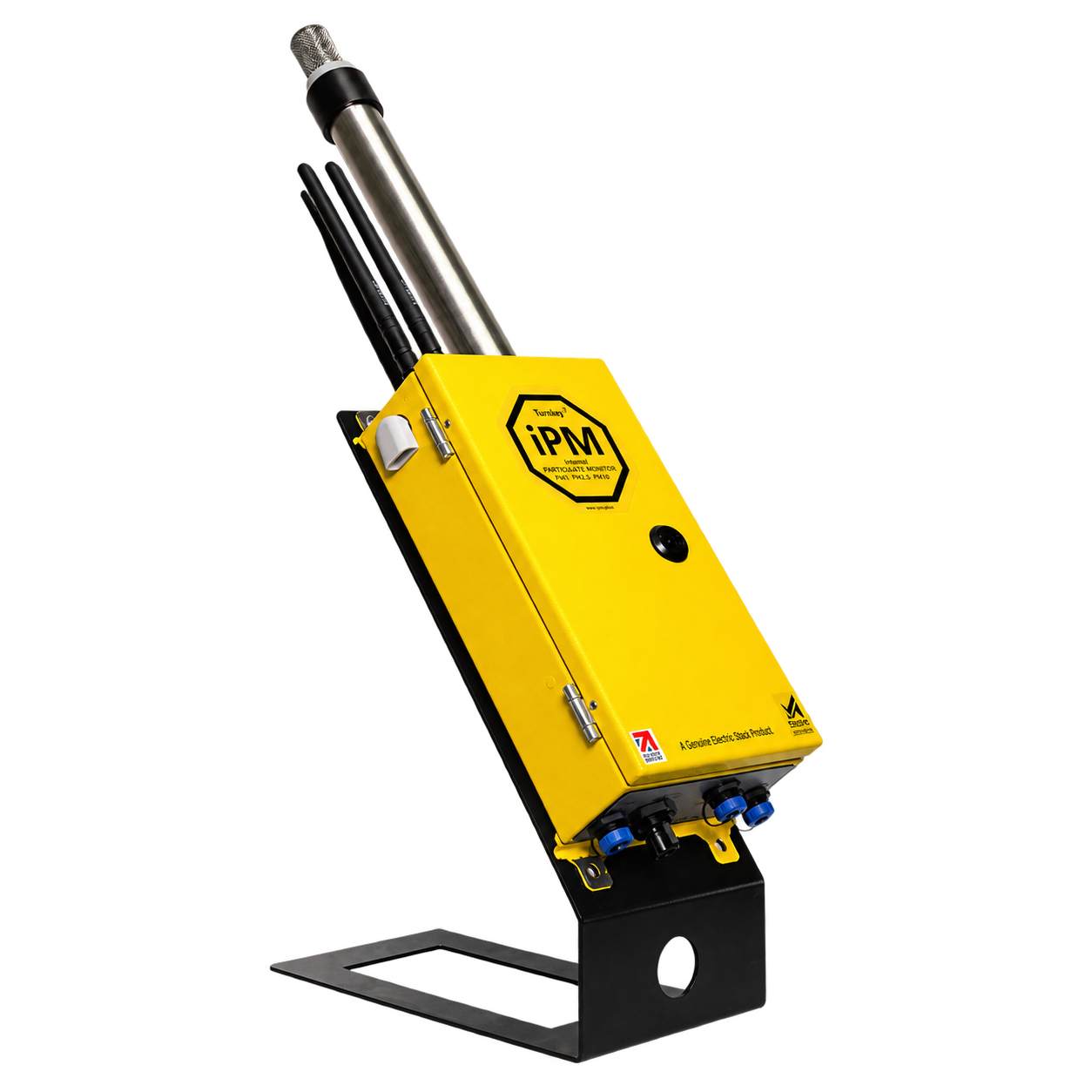
For particulate monitoring, the Turnkey iPMplus simultaneously measures PM₁, PM₂.₅, PM₄ (respirable) and PM₁₀ and incorporates a particle spectrometer. It is MCERTS approved for PM₂.₅ and PM₁₀ measurement and can be equipped with meteorological sensors, including wind speed and direction. Turnkey Instruments
Where gases also need to be investigated, Turnkey's iGASair can measure multiple gas species and operate alongside particulate monitors, with data available remotely through AirQWeb. Turnkey Instruments
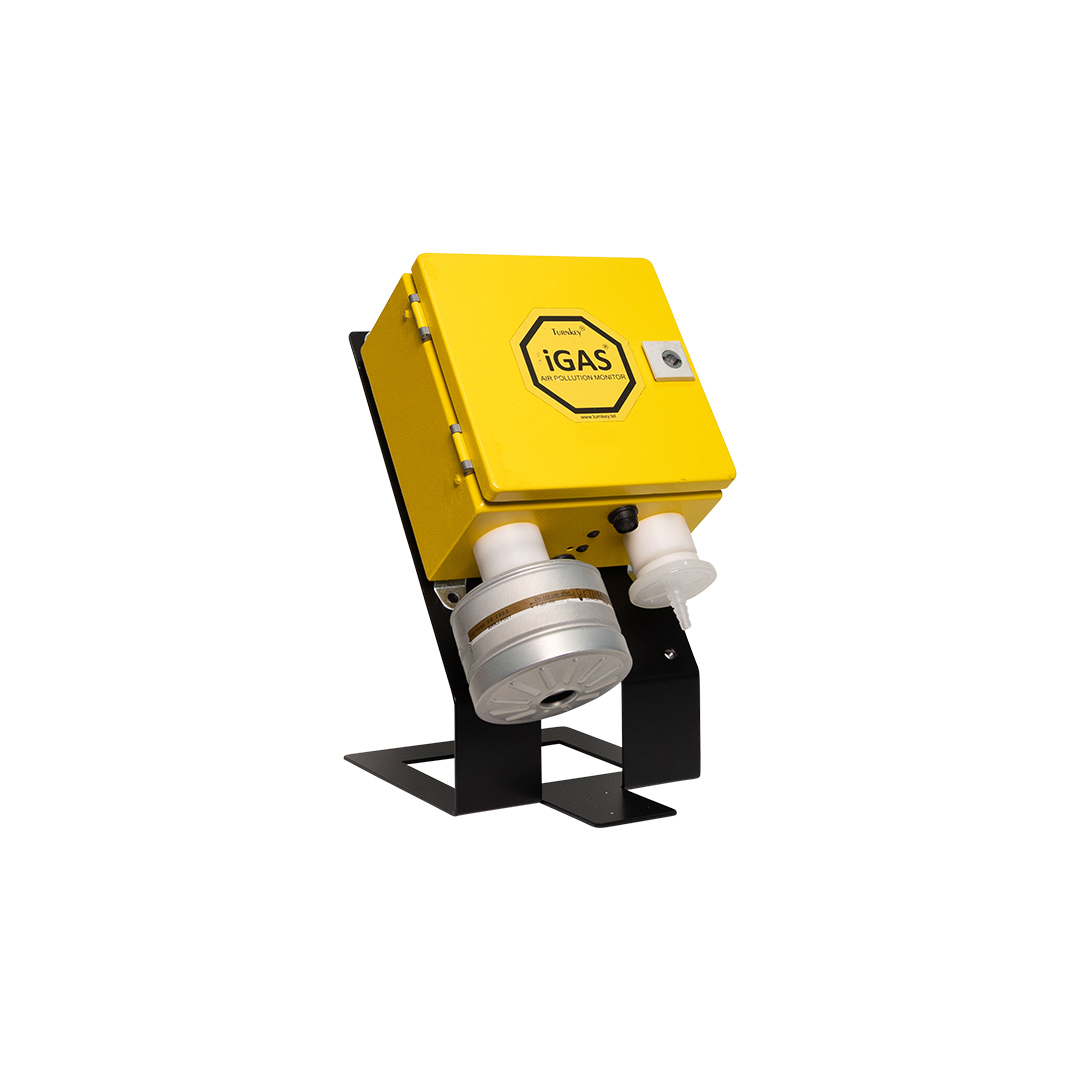
This combined approach can give environmental professionals, farm operators, regulators and communities something far more useful than an assumption about local air quality:
evidence of what is actually happening in the air.
Whether the objective is investigating complaints, assessing environmental impact, understanding exposure or establishing longer-term trends, good decisions begin with reliable measurements.
To discuss particulate, gas or meteorological monitoring for an agricultural or environmental air-quality project, contact Turnkey Instruments.
Research trail / 08
Further reading and research
The following resources were used in researching this article and provide useful further reading:
- Environment Agency — Intensive farming risk assessment for environmental permits — UK guidance covering ammonia, odour, dust and bioaerosol assessment around intensive farms. GOV.UK
- Environment Agency — Pig and poultry intensive farming environmental permits — current regulatory guidance for intensive poultry and pig installations in England. GOV.UK
- Environment Agency — Chief Regulator's Report 2024–25 supporting evidence — current data on agricultural ammonia and PM₁₀ emissions. GOV.UK
- World Health Organization — Global Air Quality Guidelines — international evidence and guidance concerning particulate matter and other major air pollutants. World Health Organization
- Journal of Environmental Management — Ammonia emissions, impacts and mitigation strategies for poultry production — comprehensive review of ammonia sources and impacts in poultry production. ScienceDirect
- Journal of Environmental Management — Concentration and composition of bioaerosol emissions from intensive farms — UK research examining bioaerosols downwind of pig and poultry farms. ScienceDirect
- US Environmental Protection Agency — Agriculture and Air Quality — information on monitoring emissions from animal feeding operations. US EPA
- PMC — Tracking airborne Staphylococcus aureus in and around chicken houses — research examining airborne microorganisms at distances up to 400 metres downwind.